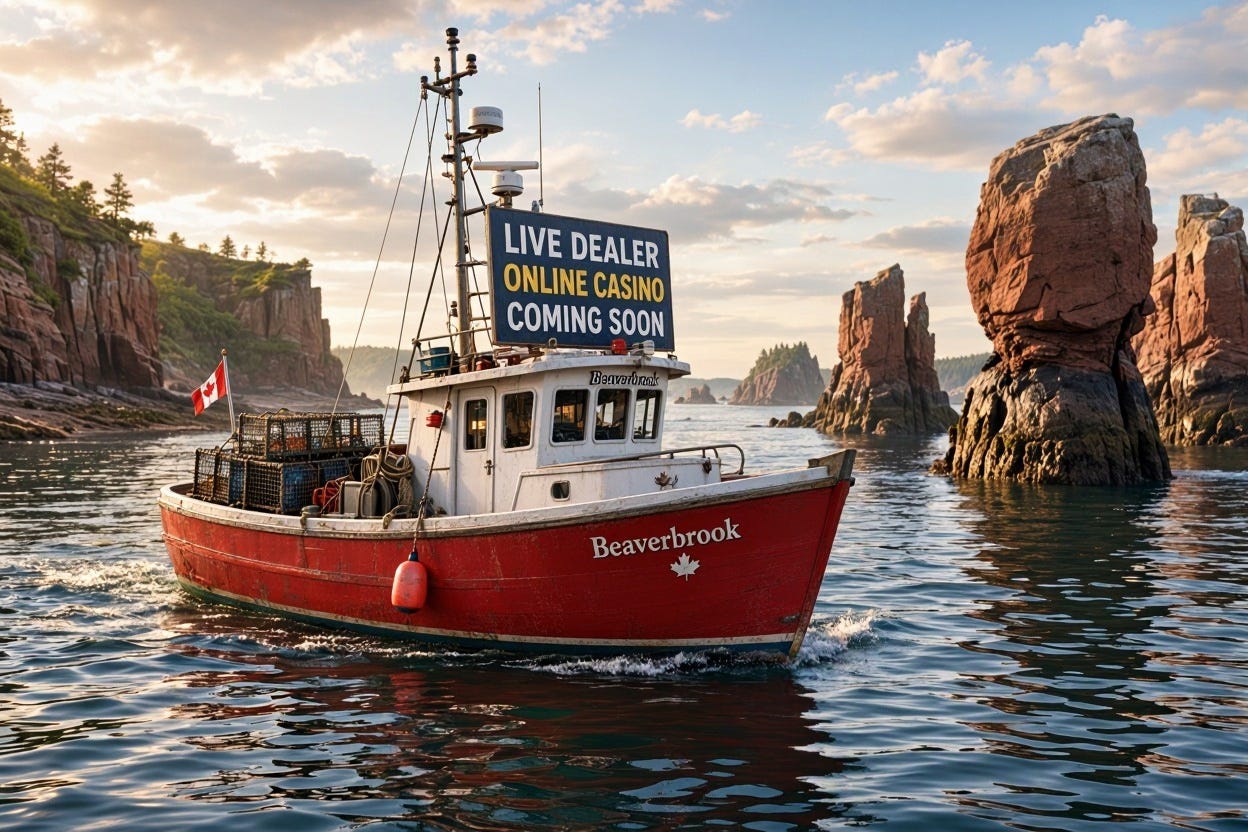
It still has a long way to go, but New Brunswick took a small step toward an expanded regulated online gambling market at the end of last week when its legislature passed a bill allowing live dealer casino games via its only legal operator – the Atlantic Lottery Corporation (ALC) site.
New Brunswick is the last of the four provinces in the ALC’s jurisdiction to allow live dealer games, though it was the first in the group that includes Nova Scotia, Newfoundland and Prince Edward Island to legalize online casinos without live dealers.
Once the bill allowing live casino games receives Royal Assent from the province’s Lieutenant-Governor, it will become law. It is expected to add $1.9 million to New Brunswick’s coffers in the first year, rising to $2.4 million in Year Two. But it’s what New Brunswick finance minister René Legacy is saying about further online gambling expansion that is piquing more interest in the industry.
In a Canadian Gaming Business story by Tom Nightingale, Legacy said the province is studying whether to follow Ontario and Alberta’s lead and open regulated online gambling to private operators.
“Approaches in other provinces and jurisdictions are being monitored as government considers how best to maintain a safe, responsible, and appropriately regulated gaming environment for New Brunswickers. The review is ongoing,” Legacy told Nightingale.
The ALC estimates it captures about 35 per cent of the total online gambling revenue in its jurisdiction and is missing out on 65 per cent of the market, a loss of more than $250 million in revenue every year that flows to unregulated sites.
Beyond the loss of a lot of revenue, the fact 65 per cent of the gambling dollars are wagered on unregulated sites leaves most Atlantic consumers who choose to gamble online without any protections.
Legacy said during the committee meeting on Nov. 17 that allowing live dealer casino games was an effort to increase the number of New Brunswick consumers wagering via the ALC.
“Making ALC the worst provider of service is not going to help,” he said. “It’s just going to send them all to the illegal sites, and then we have no control.”
What could a regulated market look like in New Brunswick? The province has a population of less than 900,000. In terms of other regulated online gambling jurisdictions, that makes it most comparable to the state of Delaware (pop. 1.07 million), which has both legal online casinos and sports betting - on a limited basis.
BetRivers is the only legal online casino and sports betting operator in the state, and it is tied in with the casinos at the three racetracks in the state – Bally’s Dover Casino Resort, Harrington Raceway and Casino and Delaware Park Casino. The online products are overseen by the Delaware Lottery.
In fiscal year 2026, which ended in June, the total online gambling revenue in Delaware was just under $136 million U.S. The amount the state received in taxes from online gambling wasn’t disclosed by the Delaware Lottery, but in the prior fiscal year, it amounted to about a 20 per cent rate. Though the tax rate in Delaware fluctuates depending on the gambling product, using a 20 per cent taxation rate as a guide and applying it to the most recent revenue figure equals about $27.2 million in taxes.
If New Brunswick opened up to a handful of operators and used a 20 per cent tax rate that is comparable to Ontario, Alberta and Delaware, it could collect more revenue than Delaware annually. More importantly, it would help fund increased responsible gambling initiatives in the province and likely would draw more New Brunswickers away from the unregulated market.

Is your iGaming platform truly driving your digital growth? Choose a provider that aligns directly to your ambitions.
Click here to find out what other global operators have to say about the unparalleled partnership of Bede Gaming.
Ontario’s premier says gambling advertising is “out of control”
The premier of Ontario is calling on his cabinet to look into what he believes is “out of control” marketing when it comes to gambling ads appearing on television and social media channels.
More than four and a half years into Ontario’s regulated sports betting and online gaming market, Douglas Ford told reporters yesterday the current volume of ads “isn’t good for the people”.
“We’re going to look into it and they’ll come back with their findings,” said Ford, adding that media companies may be unhappy with a potential crackdown and saying to reporters at Queen’s Park, “I’ll likely get calls from your bosses”.
Liberal MPP Lee Fairclough, whose private member’s bill to ban gambling ads was defeated in May, said she was glad to see Ford has “finally woken up”.
What exactly parked the premier to weigh in on the advertising issue was unclear yesterday during a media scrum. And with regards to who from the provincial government will be looking “into it” is somewhat fuzzy at this juncture. Ford’s remarks come almost six months after Stan Cho (the former Minister of Tourism, Culture and Gaming) spoke with Gaming News Canada about concerns with the number of ads.
“This is a growing problem,” said Cho after speaking at the SBC Summit Canada. “We recognize that, and we will continue to look at advertising and what we can do to make sure that it is reasonable when it comes to online gaming. Now, I don’t have all the answers on what we will be looking at yet, but I had a conversation with the attorney general (Doug Downey), and we are very seriously looking at additional measures on the advertising side to make sure this doesn’t make the problem grow.”
In May 2025, Senator Marty Deacon introduced a bill in the Senate to restrict sports betting advertising (we have an update of sorts elsewhere in this dispatch on Bill S-211). In February 2024, almost two years after raising the curtain on the Ontario market, the province’s alcohol and gaming commission put into effect new advertising standards that prohibited the use of athletes (except for responsible gambling messaging) and restrictions on the use of athletes.
AiGC targets young adults with new responsible gambling policy
In hockey parlance, the Alberta iGaming Corporation is reading and reacting to create a new responsible gambling policy focused on young adults.
During an announcement-laden week at the AiGC - including its inaugural Responsible Gambling Week and introducing its Beyond the Bet initiative – the Corp made public plans to put more meat on the bone around its responsible gambling framework “by implementing proactive protections for young adults within Alberta who participate in regulated online gambling.” During his latest appearance on the Gaming News Canada Show presented by Bede Gaming, AiGC head honcho Dan Keene confirmed that the new policy has been built in response to research shining a light on the impacts of iGaming on 18-24-year-olds.
“Research has guided some of this policy, but it’s also (a response to) an evolution of the market,” Keene told GNCS host Steve McAllister. “It’s a proactive evolution of the current policies that exist that is tailored towards that age cohort.
The policy, which Keene told McAllister has received input from licensed operators in Alberta, is still in draft form but is expected to be finalized by the end of next month and take effect in the spring of 2027. It will:
Prohibit dedicated VIP hosts from being assigned to players under 25.
Restrict communications around return-to-play incentives such as inducements, bonuses, free bets, promotional credits, or similar messages that reactivate players under 25 whose accounts have been inactive for six months or longer.
Enhance monitoring, risk profiling, and intervention for players under 25, and proactively review newly registered players in the demographic.
“A 19-year-old doesn’t need a personal VIP host,” said Keene, who compared the province’s evolving responsible gambling guardrails to the graduated licence guardrails placed on young drivers
“If you’re new to this (iGaming) product, there were strong responsible gambling elements. Now, there are more elements for this age cohort.”
Is selling Play Alberta the right move for its owners?
Geoff Zochodne had an interesting piece in Covers last week about the value of the Alberta government selling its Play Alberta platform.
Zochodne argues that it makes a lot of sense for the province to sell Play Alberta – and sell it soon – given that the province, which launched an open market on July 13 of this year, is already home to more than 50 operators.
“Play Alberta has a pretty valuable brand and customer database it can offer potential buyers,” Zochodne wrote. “Anybody who wants to try to supercharge their growth in the Alberta sports betting market could purchase these assets and run with them.
“Play Alberta boasted more than 434,000 registered player accounts last year. It has partnerships with professional sports franchises and athletes in Alberta, as well as with the Calgary Stampede. All of this brand awareness and information could prove valuable to someone.
“While exactly what will be sold is still TBD, it’s worth noting Play Alberta has capabilities that private-sector platforms lack in the province — namely, lottery sales.”
Time is of the essence, Zochodne argued, because private operators are battling for market share and chipping away at Play Alberta’s cut. His theory is that Play Alberta’s share and value will decrease over time.
Still, Alberta should be careful here, and the price tag needs to be substantial for it to exit the operator side of the game.
Any one-time payout will only last so long, and continuing to hold Play Alberta will pay important dividends every year – primarily because it is the lone online lottery retailer. In a province where finances are dictated by the strength of an oil industry that has fluctuated wildly in the last decade, Play Alberta provides predictable returns.
Also, it’s not impossible for Play Alberta to follow the lead of the Ontario Lottery and Gaming Corporation (OLG), which still holds significant market share, despite even greater competition from operators. The OLG has done well against more than 80 online platforms by improving its product, leaning heavily on its retail presence in some 10,000 convenience locations and telling Ontarians that 100 per cent of the gambling proceeds via OLG are returned to the province.
There’s no reason Play Alberta couldn’t follow that playbook and provide a steady stream of annual income for many years to come.
UK government says no to a ban on sports betting advertising
While our elected officials on Parliament Hill decide if they’ll move ahead with Bill S-211 and proceed down a path of putting restrictions in place when it comes to gambling advertising, the government in the United Kingdom is giving a thumbs down to the pursuit of a blanket ban.
That government across the pond rejected a key recommendation put forth by the House of Lords in its Gambling Harm – Time for Action inquiry. The house’s liaison committee cited plans in the Netherlands for an across-the-board elimination of gambling ads, along with action taken in Australia to limit such commercials.
From the government’s response to the ban recommendation, as reported by SBC’s Patrick Killeen:
“The Government will not take forward a comprehensive ban on gambling advertising. As part of a legitimate and regulated industry, it is right that operators are able to responsibly advertise the services they offer.
“A widespread ban would not be targeted at those who are most vulnerable, including young people. It would likely have negative knock-on impacts for sectors supported by advertising, enjoyed by millions across the country.”
Killeen’s reporting also pointed out the government’s dismissal of other recommendations:
A ban on gambling sponsorships below Premier League level
A move to “tolerating” gambling rather than promoting the practice
An extension to the voluntary front-of-shirt ban in the Premier League, which would prohibit gambling firms from sponsoring training kits
An accompanying watershed-based or more comprehensive restriction on online advertising
A revision of the ASA’s CAP Code to prevent bookmakers from using the term “free bet” along with other “related formulations” in advertising
Introducing formal licensing for affiliates
We expect the adoption of Bill S-211 and creating “a national framework on sports betting advertising” will be a slow dinghy ride down the St. Lawrence Seaway. Instead, as has been discussed in this forum and on the Gaming News Canada Show, there are measures that can be taken to tweak the rules around advertising in both of Canada’s two regulated gambling markets. Those measures should be the result of due diligence by the regulators in consultation with the market’s stakeholders including operators, traditional and digital media companies, and professional sports leagues.
New report focuses on gambling and female sports/athletes
In this corner, we’ve made the point on more than a few occasions of the need for sports leagues to be more accountable when it comes to their partnerships with gambling operators. As is often the case, the focus tends to be on sports involving men.
So, we thought it our duty to report on a. . . er . . report co-authored by EPIC Global Solutions and Leaders in Sport that was released Monday.
Beyond the Bet: Gambling, Integrity and Leadership in Women’s Sport examines the impact of betting on female athletes at a time when professional women’s sport is (finally) exploding when it comes to more opportunities for athletes, the creation of new leagues, expanded broadcast and corporate partnership deals, etc.
From the report:
Deloitte estimates that the global women’s elite sports revenue will reach a value of at least US$3 billion in 2026, representing a 340 per cent increase since 2022, with commercial sources accounting for 46 per cent of total revenue in 2025.
Female athletes have benefited from this growth through greater visibility, investment and opportunity. However, greater visibility has also increased exposure to gambling-related harms such as the risk of problematic gambling behaviour among athletes, abuse and threats from bettors, and the steady normalization of betting in the environments where women’s sports participants compete.
Other topics include the need for education of athletes about gambling harms, improved tools for dealing with online abuse and harassment, and for protection programs that target females.
The report was released just days after an announcement from Betty that it’s taking a leap into the world of women’s sports as a corporate partner of the Professional Women’s Hockey League. The Ontario and Alberta-licensed operator will be the presenting sponsor of the PWHL Takeover Tour in Alberta early next year and will be involved in PWHL All-Star festivities in Toronto in March.
“Women’s professional sports are experiencing incredible momentum, and we’re proud to be part of that growth through our partnership with the PWHL,” said Betty brand marketing VP Andrea Stodart in a news release. “We recognize the importance of investing in women’s sports and supporting the athletes and communities driving them forward.”
A suggestion for Betty that part of that investment could be supporting education for PWHL players around integrity and gambling harms. We’ve also long called for operators to integrate a sober thought or three into their responsible gaming messaging when it comes to the use of athletes and celebrities. Tapping into some of the best hockey players on the planet makes sense in our humble opinion.
Canadian Gaming Association, GeoLocs getting together on an info webinar
The Canadian Gaming Association and GeoLocs are doing the collaborative thing next week with a webinar titled Lessons from Ontario and Alberta’s Regulated Gaming Markets.
Will Whitehad, commercial director for GeoLocs and mkodo, will be joined virtually on December 1 by CGA CEO Paul Burns, PointsBet Canada CEO Scott Vanderwel and Fiona Stuart, Bede Gaming’s head of client success. The gaming industry quartet will dive into regulation, compliance, market growth and industry collaboration around Canada’s two regulated gambling markets.
To register for the webinar, click here.
DraftKings lends a hand to GTA food bank, Home for Heroes Foundation
When the curtain was raised on the Alberta market back in July, there were incoming operators whose marketing spend included donations to charitable organizations. That gift of giving has continued. Earlier this month, during Grey Cup Week, FanDuel got together with Nickelback on a fundraising venture around the CFL game on behalf of the Calgary Food Bank and the CFL Alumni Association Support Fund.
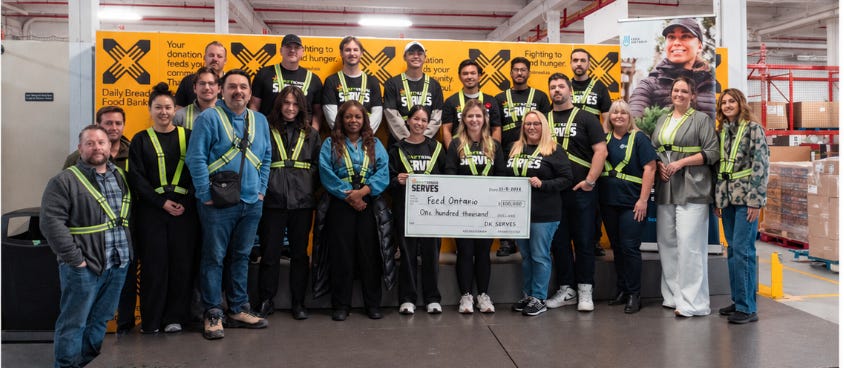
Also this month, DraftKings has steered $50,000 to the Homes for Heroes Foundation. And Monday, the operator announced a $100,000 donation to the Daily Bread Food Bank in Etobicoke at the west end of Toronto. Those funds followed a Canadian Thanksgiving program by DraftKings with $1 for every bet placed over the long weekend in October being donated to support Feed Ontario.
Staff from DraftKings, through the operators’ SERVES initiative, also joined Daily Bread Food Bank employees/volunteers to lend a hand.
Last call for Montreal gaming industry rendezvous tomorrow
During your cordial editor-in-chief’s conversation with Paul Burns on a recent episode of the Gaming News Canada Show presented by Bede Gaming, the topic came up about the deep talent pool across the country with regards to the gambling industry.
That includes Montreal, hence, the motivation for acquire.bet head honcho Allan Petrilli to organize a gathering of industry types at the Lord William Pub tomorrow afternoon/evening.
The CGA is lending a helping hand for the event and registration is available here.
People on the Move
News last week out of Better Collective, where Christian Kirk Rasmussen is stepping aside as co-CEO but remains with the company. Jesper Sogaard will fly solo in the CEO’s seat.
Jonas Cederholm is the new CEO at Game Lounge.
Danny DiRienzo, ex of BetMGM and GeoComply, is appointed Chief Compliance Officer at Worldpay.
Nuvei appoints Sara Savidge as Global Head of Strategic Verticals.
Negin Namazi is named Head of Commercial at Montreal-based StatsDrone and its new NousViz business.
Entain appoints Jennifer Taylor as Head of Brand Marketing – Ladbrokes & Coral (Gaming).
Interblock Gaming names Matthew Mabry as Chief Financial Officer and Teri Chan Palomaki as Senior Vice President, People & Culture.
Sabrina Pinto, formerly of Pace Gaming, joins PENN Interactive as Vice President of VIP.
Lachezar Rankov departs Aristocrat Interactive and his role as Vice President, Technology and Architecture – C&A.
Zoltan Horvath is leaving Playnetic and his Head of Math position to join IGT and Director of Game Math Design.
After 18-plus years, the past six as Senior Director, Strategic Business Development, Gaming, Mario Vilela exits IGT.
Gionvanni Marano is named Senior Director of Analytics at Fanatics.
Relax Gaming names Robin Becker as Director of Marketing.
Taisha Saniatan has a new gig at Caesars Entertainment as Director of AML Compliance.
EPIC Global Solutions appoint Andy Cunningham as Director of Commercial Partnerships.
Michael Velasco departs Better Collective and his role as Director of AI Transformation.
Doug Wylie, ex of Public Health Ontario, is appointed Risk Management Officer at iGaming Ontario.
At Xtremepush, Leti Angelo is named Director of Strategic Partnerships and Philip Canavan as Sales Team Lead.
Liam Hudson joins Better Collective as Senior Head of Social and Growth – Playbook.
Brandon Justice, ex of Grandstand, joins PLAYERSBEST as Lead – Commercial & Editorial.
Caitlin Banks departs Light & Wonder for a position at Aristocrat Interactive as Product Marketing Director. Adam Painter has a new role as Associate Director of Service Management.
Maggie Hancock comes aboard the Saskatchewan Indian Gaming Authority as a Digital Marketing Specialist while Crystal Gibson has a new role as Manager of Player Development.
Matthew Kaiser joins the Alberta iGaming Corporation as Manager, Technology Services.
Parker Varnai, formerly of The Princess Margaret Cancer Foundation, joins FanDuel Canada as Communications Senior Associate.
Kaylee Welsh comes on board at the Alberta iGaming Corporation as an Operations Coordinator.
Classified (Jobs) Information
On the Home Front
Rush Street Interactive is seeking a Senior Product Analyst, Digital Measurement.
FanDuel is looking for a Customer Growth Senior Associate.
The Alberta iGaming Corporation is seeking a Director, Data Science & Analytics, a Manager, Data Science & Analytics, an Advisor – Recruitment and Total Rewards, a Responsible Gambling Program Analyst and a Privacy Analyst.
In Montreal, the World Anti-Doping Agency is hiring a Chief Financial Officer.
Saskatchewan Liquor and Gaming Authority has an opening for an Investigator and a Manager, Outbound Logistics.
Delta Bingo & Gaming has an opportunity for a Compliance Investigator.
In Toronto, Betty has a hybrid opening for an IT Administrator.
The Canadian Paralympic Committee is looking for a Manager, Business Development.
South of the Border
MGM Resorts International has an opening for a Director, Commerce Media.
Wanted at the Las Vegas Convention and Visitors Authority: a Director of Digital Content.
In Austin, TX, Aristocrat Interactive is on the hunt for a Strategic Delivery Director, Customer Portfolio.
Hard Rock Digital is in the market for a Lead – Trading Origination, NHL.
Wanted at the Massachusetts Gaming Commission: a Deputy General Counsel.
Our friends at GBG Plc have a remote opening in the U.S. for a Sales Executive, Gaming.
The Gambling Control Unit of Maine is looking for a Criminal Intelligence Analyst.
Boomer’s Sportsbook has an opportunity for a Senior Manager, Mobile Retention and Engagement.
NFL HQ is seeking a Manager, Global Social Monetization.
Across the Ponds
In London, Betty UK is seeking a Vice President of Compliance.
Prime Entertainment is hiring a Head of Compliance in Malta.
Light & Wonder is seeking a Senior Legal Counsel.
Riot Games is on the lookout for a Senior Brand Manager – Eastern Europe.
In Berlin, GRID eSports GmbH has need of a Sales Manager – Betting & Odds.
For Your Perusing Pleasure
There was M&A news of the rather significant sort yesterday involving Shift4 and Canadian payments company Paramount Commerce.
CBC journalists Dave Seglins, Saloni Bhugra and Andreas Wesley collaborated on a piece around high-risk gamblers not being protected by licensed operators in Ontario.
Speaking of the CBC, Karissa Donkin spoke with folks from Sport Integrity Canada, the Canadian Olympic Committee and Canadian Paralympic Committee about match manipulation.
And, there’s more from the CTV News Ottawa series examining problem gambling.
Calgary Herald columnist Don Braid isn’t pleased that the current owners of Play Alberta won’t delete his data.
A Canadian children’s advocacy group is calling for the federal government to at some point cover gaming platforms with its proposed digital safety bill.
Canadian Gaming Business perused the latest gaming insights and performance report from bet365, which found “notable” differences in the games people play in Alberta and Ontario.
For the first time, the Responsible Gambling Council has given the green light to RG Check accreditation with igaming sites in Portugal, Poland and Cote d’Ivoire.
Covers guy Geoff Zochodne did some tapping on the keyboard about the possibility of the latest Grand Theft Auto version taking a bite out of the books.
Speaking of GTA VI, Zochodne found that athletes in the game are being harassed because of sports betting. Geez Louise. . . .
Maverick Gaming, which is pulling out of Ontario’s regulated market, has acquired eight cardroom casinos in the state of Washington.
Casino.org chronicler Mark Keast writes that despite their early-season trials and tribulations, the Toronto Maple Leafs continue to attract lots of attention from bettors.
Included in Dan Robson’s outstanding series for The Athletic on the stress NHL goalies face today is the harassment they receive from the almost-always-anonymous idiots on social media, some of them who bet on sports.
Nick Berardini, the author on The New Yorker’s deep dive into the Jontay Porter gambling scandal, appeared on the Burning Sage podcast.
A report commissioned by the European Casino Commission estimates 72 per cent of revenue from online gaming across the European Union in 2025 went to illegal operators.
Zak Thomas-Akoo of NEXT.io was first to report that Fanatics is getting into the business of live horse racing-powered slots.
Fortune editor Emma Hinchcliffe did the profile thing on Kalshi co-founder Luana Lopes Lara.
It’s a. . . er. . . safe bet that Major League Baseball will have a labour stoppage next season, so Jeff Edelstein wrote about the potential impact on sports betting revenue.
Arnold Ventures has put out an RFP for “Research on the Impacts of Online Gambling”.
The post FIFA World Cup-betting landscape hasn’t been very kind to U.S. sportsbooks, writes Rob Fletcher of NEXT.io.
According to Amazon’s advertising rules, prediction markets operators belong with gambling companies.
The Attorney General of Utah is taking legal action against Stake.
At the same time, the AG in that state is withdrawing charges against Kalshi and its founders.
MGM Resorts International and BetMGM are the latest operators to bid adieu to the National Council on Problem Gambling.
Jill Dorson, for InGame, reported on the debate around the Pauma Tribe’s new sportsbook in California.
ESPN’s David Purdum with more on the betting scandal trial involving two MLB pitchers.
Better Collective, owners of The Nation Network media brand in Canada, last week made public its third-quarter financials.
The ABC Eyewitness News affiliate in Chicago took a look at youth gambling in the Windy City.
Florida’s attorney general isn’t a big fan of DraftKings’ new peer-to-peer game that’s being offered in the state.
OneHazel founder Keith Zammit appeared on the Betting Startups Podcast.
There will no longer be editorial content on greyhound racing in the Racing Post.
Stay up to date with the news on the Canadian gaming industry by following us on LinkedIn and Twitter.
Please send your news releases and other announcements to steve@gamingnewscanada.ca. Also, if you’re interested in learning about our sponsorship and advertising opportunities in the newsletter and on our podcast, please email Steve McAllister.