


For at least two years, Ontario Premier Doug Ford has said he wanted to turn Niagara Falls into a Las Vegas North, but does the project make sense given today’s gambling climate largely created by that very same Progressive Conservative government? We believe this one could be a major reach.
In December of last year, Ford announced plans for Destination Niagara. Last week, the Ministry of Tourism, Culture and Gaming announced a Call For Investment in the project that hopes to, ultimately, see five major casinos in the tourist hotspot – three new ones to go with the pre-existing Fallsview Casino Resort and Casino Niagara, both operated by MGE Niagara Entertainment Inc.
Niagara Falls is certainly the right town for this kind of project, and if it creates good-paying jobs to build casinos, that’s a huge positive to help the province deal with the severe blow it has received in the U.S. trade war.
But, on the surface, convincing major casino interests – many of which are not swimming in money these days – to build three more casinos in Niagara Falls seems like it will be a significant challenge.
Finding investors willing and able to fork over a “minimum investment of $1.5 billion” with a $100 million market “entrance fee” for each new casino – a fee designed to “offset any provincial revenue loss from changes to MGE’s exclusivity rights under the Niagara Gaming Bundle” – just to enter a highly-competitive gambling market will be no easy task.
But, for argument’s sake, let’s say the province finds those investors and these casinos get built. We think there are at least three other major impediments to Destination Niagara being a success:
The biggest obstacle is, obviously, Ontario’s massive open online gambling market launched by the Ford government in 2022. More than four years in, the revenue continues to grow at a prodigious pace and, because online casinos are part of the package, people no longer have to travel to play casino games. Considering retail casino revenue in Ontario has declined, online gambling is a strong bet to be one of the culprits.
Even in the retail space, there’s a lot of competition. This isn’t 1994 when Casino Windsor became the first retail casino in the province. More than 30 years later, there are 30 retail casinos saturating the market that, in totality, are located a short drive from where most Ontarians live, making a trip to Niagara Falls unnecessary. Besides, the gold-rush glitz and glamour days of a retail casino opening are long gone. They’re no longer exciting new places that draw large crowds just by existing.
Surely, at some point, the government will face pushback from the electorate about a further expansion of gambling that is at least partly responsible for a rise in gambling-related harms – particularly since the Ford government seems to want to downplay those harms by shelving critical research into problem gambling. Ford’s damn-the-torpedoes approach to gambling expansion despite the societal costs surely won’t sit well with many who don’t think more casinos are a good thing.
Of course, Niagara Falls is close to the U.S. border, and the hope is to draw visitors from outside of Ontario to the province. But Windsor learned long ago that drawing U.S. patrons across the border to gamble – especially in an age of heightened border inspections and hassles – is no longer what it once was because both retail casinos and online gambling are available in Michigan. The same is true in New York, which has plenty of retail casinos and online sports betting. The attraction of a favourable-for-Americans exchange rate on the Canuck buck and tax-free winnings only goes so far.
Also, given all that, is five essentially similar casinos a bigger draw than the two that are in Niagara Falls now? We’re skeptical.
Sure, the more attractions you put in one place does seem to have a cumulative attractive effect. Yes, it will be a bit of a draw for each of these casinos to have multiple world-class restaurants and other amenities. But is that enough to support five huge casinos in one place?
Atlantic City has proven that putting a bunch of casinos on a strip with similar amenities isn’t enough.
Las Vegas is particularly unique as a destination gambling and entertainment locale, particularly in the era of gambling saturation just about everywhere – and even Vegas is suffering these days, partly because many Canadians are boycotting it over Trump’s tariff war.
Yes, the Falls themselves are majestic and are already a draw, but do we believe international visitors are going to choose Niagara Falls as a destination over Las Vegas with what it has to offer? We’re skeptical.
Yes, an investment of this magnitude will mean good-paying construction jobs and a boost in employment for the Niagara Falls region. But the current gambling climate, largely created by the reigning Ontario government, will make it very difficult for that same government’s Destination Niagara dreams to be anything but the pipe variety.
Standing committee on Canadian Heritage approves Bill S-211 for next stage
What appears to at times get forgotten in conversations around Bill S-211 is that any concrete actions by the federal government that target gambling advertising won’t be happening any time soon.
That was reinforced yesterday afternoon by several participants in the Standing Committee on Canadian Heritage meeting that included testimony from representatives of both the Canadian Radio-television and Telecommunications Commission, and Health Canada around the “act respecting a national framework on sports betting advertising.” There were amendments - some of which were approved and some denied with voting running along partisan lines between the committee members from the Liberal and Conservative parties. S-211 was approved for being reported back to the House of Commons for debate and eventual third reading.
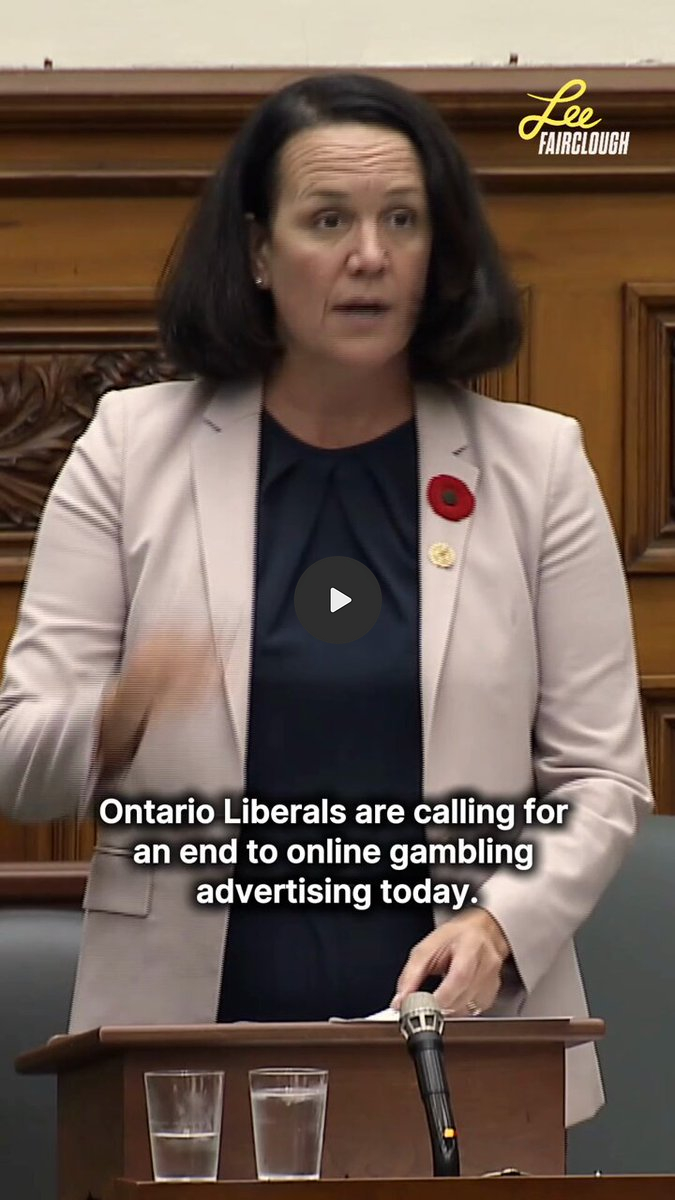
Unless you’ve been doing the Tom Hanks-speaks-with-a-volleyball on a deserted island and/or haven’t had access to the World Wide Web, there have been calls a plenty for our elected officials to do something about the much-discussed amount of advertising by gambling operators, particularly by the players in Ontario’s regulated market. Toronto Star business columnist Adam Radwanski was the latest this week to make the case for the federal government to intervene. And Ontario Liberal leader hopeful Lee Fairclough went one step further at Queen’s Park yesterday:

But, back to the proceedings on Parliament Hill. Conservative MP Andrew Lawton made it crystal clear during the discussion of amendments segment of yesterday’s committee meeting that the bill isn’t a quick fix to what some folks see as a leading factor to children being exposed to gambling and gambling harm among young adults.
”We have to be realistic. . . the problem is that this bill creates a report,” Lawton said. “It’s not a ban on sports betting advertising.”
Added Conservative MP Gabriel Hardy: “We should work quicker to prioritize our youth. When you look at the bill, there’s no urgency.”
Liberal MP Fares Al Soud responded: “Much of this is about coming to terms with a framework. It’s important we take the time to do it right.”
As Canadian gaming industry experts have said repeatedly, there needs to be a number of voices at the table. Among those is the CRTC, which is responsible for the regulation of radio, television and online news outlets, and works with organizations such as Ad Standards when it comes to advertising. Scott Hutton, the commission’s secretary general, told the committee yesterday that the CRTC is starting to take “a closer look” at provincial gambling jurisdictions across the country.
“Ontario seems to be ahead of the pack when it comes to broadcasting and advertising standards,” said Hutton, adding the commission is also starting to work with Health Canada on “assessing the impacts (of gambling ads) on young people and the Canadian public at large.”
CRTC senior executive Sheehan Carter referenced the Canadian Gaming Association’s Code for Responsible Gaming Advertising, which applies to CGA members and is administered by Ad Standards.
The ongoing process hopefully includes elected officials better educating themselves on this file. A couple of MPs referred to the ubiquitous appearance of professional athletes in ads with one MP claiming that gambling operators construct deals that allow athletes to skirt the rules around promoting sports betting. For newcomers to this newsletter, active and retired athletes are restricted to appearing in ads promoting responsible gaming in both the Ontario and Alberta markets.
It continues to surprise us that little to no mention is made of the online gaming side of regulated gambling, which is the overwhelming preference of customers using products in the two regulated Canadian markets.
We’ll continue to keep you posted.

Is your iGaming platform truly driving your digital growth? Choose a provider that aligns directly to your ambitions.
Click here to find out what other global operators have to say about the unparalleled partnership of Bede Gaming.
BetMGM bullish on its new Alberta business
OK, what do the Edmonton Oilers, Buffalo Bills and Game of Thrones all have in common?
For BetMGM and its new(ish) business in Alberta’s regulated sports betting and igaming market, they’re the most popular players for the operator’s customers. Last week, BetMGM delivered a state-of-the-first-100-days communique to somewhat pull back the curtain on what’s attracting the most attention from its customers. Also, the digital gambling operator is pleased as punch with the early returns.
“Alberta has been one of the most exciting launches in BetMGM’s history,” said chief revenue officer Matt Prevost. “In our first 100 days, we’ve seen Albertans back their home teams and gravitate toward the premium, exclusive casino content that sets BetMGM apart.
“We’re encouraged by the momentum, but we’re equally focused on how we grow. Our goal is to deliver exceptional entertainment while setting the standard as a top-tier, responsible operator in Alberta.”
The highlights so far:
Almost 51 per cent of BetMGM customers putting down money on an NHL team to win the Stanley Cup is going to the Edmonton Oilers. The Montreal Canadiens, Vegas Golden Knights, Colorado Avalanche and Calgary Flames make up the rest of the top five.
The Bills are the players’ choice to win the Super Bowl, followed by the LA Rams, Kansas City Chiefs, Seattle Seahawks and San Francisco 49ers. By the by, the Bills are also the most-popular choice of BetMGM customers in Ontario.
In the release, BetMGM pointed to the September 2026 Canada Online Game Performance Report put out by Eilers-Fantini. Lightning Link High Stakes, which is the third-most popular online casino game at BetMGM, is the most popular game tracked among Alberta operators. Game of Thrones is No. 1 at BetMGM (No. 2 across the province) followed by NHL Blackjack, High Stakes, The Price Is Right Gold Blitz Ultimate and Sugar Rush.
Alberta launch aids Betty’s record net revenue total for Q3
Launching in Alberta on Day 1 of Canada’s second regulated gambling market, combined with its existing Ontario business, paved the way for Betty to announce record quarterly revenue for the July-September period.
In a LinkedIn post late last week, Betty reported net revenue of $111 million which represents a hike of 23 per cent over the previous quarter. From that, the slightly-less-than-three-month-old Alberta market garnered $10 million of that NGR. The report also stated more than 214,000 players placed a cash bet in the quarter.
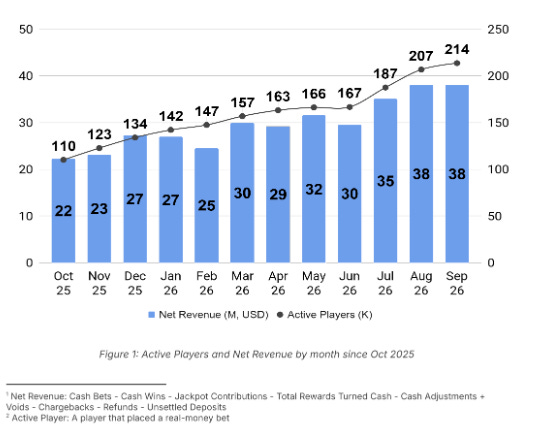
Also regarding Alberta, from the report:
Albertaʼs launch was supported by a Giveaway promotion running from June through July 12, alongside local offline brand marketing.
During Q3, Alberta recorded 42,831 new depositors, including more than 10,000 sign ups from our pre-launch campaigns.
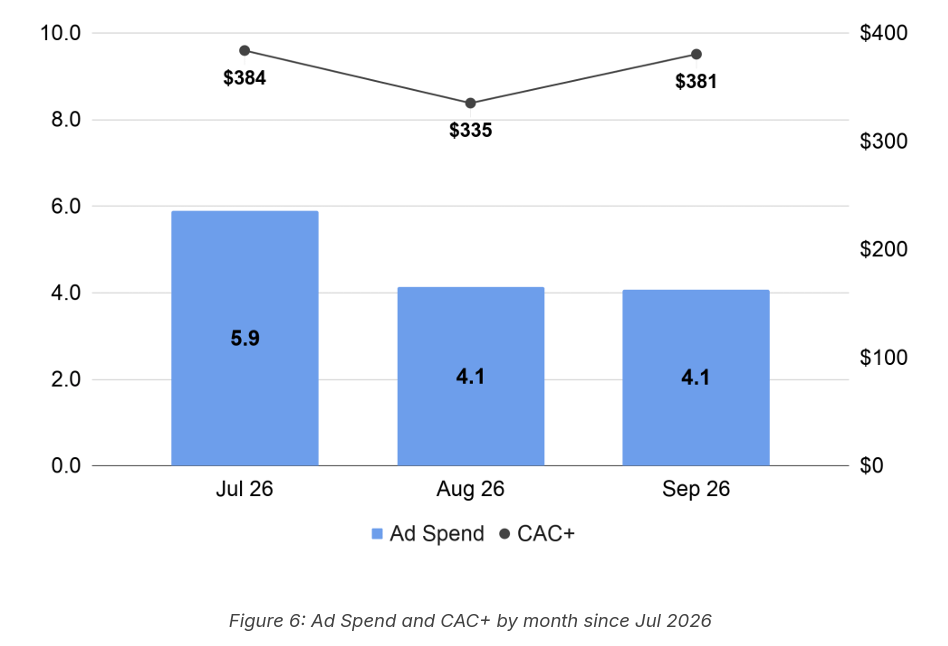
We launched across Web, iOS and Android, with acquisition spend reaching $14.1 million from July to September. Web acquisition accounted for 54% of advertising investment and apps for 46%. On this basis, CAC was $384 in July, $335 in August and $381 in September.
And:
We went live as soon as the market opened. We offered a rich product: we had a full promotional calendar, and we had over 3,000 games available from day 1.
As a result, despite the lack of official data, the early signals from the major game providers clearly show that Betty became the top slots casino in Alberta shortly after launch.
Gaming News Canada can’t confirm Betty’s claim about being No. 1 as the Alberta iGaming Corporation didn’t provide a deep data dive in its first market report.
Online casino gives PointsBet Canada a helping hand
Some key takeaways from PointsBet’s latest quarterly financials, Canadian style, that were released last week:
The Australian-opened company is set to launch its sports betting and igaming business in Alberta before the end of 2026.
The latest financials show two very different pictures regarding PointsBet Canada’s sports betting and igaming products in Ontario.
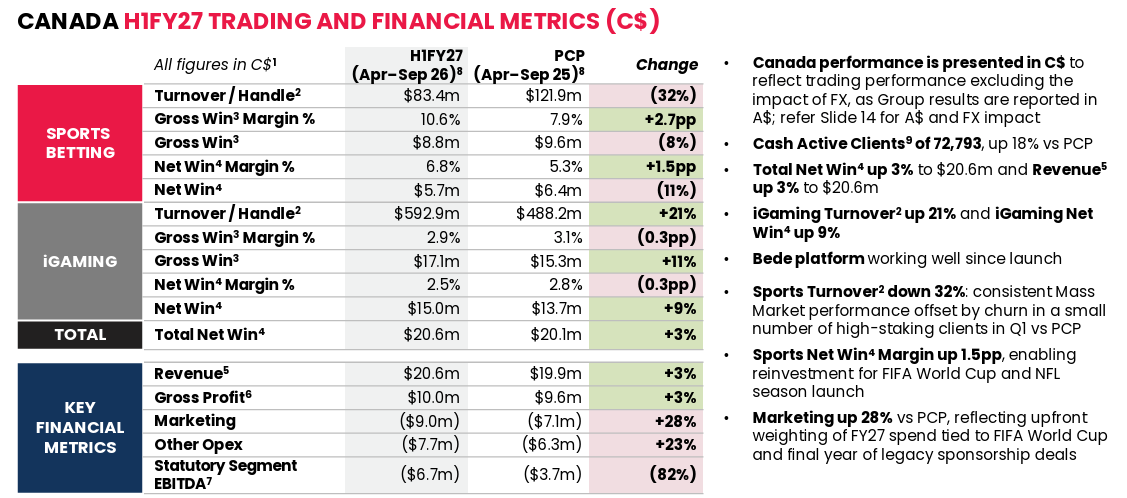
Online casino accounted for almost 88 per cent of total handle and about 73 per cent of total gaming revenue, which aligns quite nicely with what iGaming Ontario has reported on the overall regulated market. According to the company, its recent partnership with Bede Gaming has played a role in the improved online casino numbers.
The 32-per-cent drop in sports betting handle (to $83.4 million) is attributed to “churn in a small number of high-staking clients in Q1 vs PCP”. Marketing spend us up almost 30 per cent from the previous quarter because of FIFA World-Cup related spend along with legacy sponsorship deals coming to a close.
PointsBet also reported an 18-per-cent lift in cash-active clients.
Ontario posts second-best revenue month, sets record for online casinos
Figures released last week by iGaming Ontario (iGO) show total online gambling revenue in September was $416.3 million. That’s the second-best month since the open market launched in April of 2022. December of 2025 still holds the monthly revenue record at $425.4 million.
September marked the eighth time total online revenue surpassed $400 million. All eight $400 million months have come in the last 11 months.
September also produced the all-time monthly record for online casino revenue at $340.8 million, beating the previous record of $336.3 million set in August of this year. Online casino revenue made up 82 per cent of the total online revenue pie in September.
On the milestone front, lifetime revenue from online sports betting surpassed $3 billion.
Also, Ontario is on pace to shatter the revenue record for a calendar year. In 2025, total revenue was $4.038 billion. This year, through nine months, the average monthly revenue has been $398 million. If that stays consistent through the final three months – and, traditionally, the last three months of the year have been strong due to more attractive sports betting seasons – total revenue in 2026 will be about $4.77 billion, an increase of some 18 per cent over 2025.
Some other notable figures:
Year-to-Date (through September, 2026)
Total online gambling revenue of $3.58 billion up 26 per cent from $2.84 billion through first nine months of 2025
Total online casino revenue of $2.87 billion up 28.7 per cent from $2.23 billion through first nine months of 2025
Total online sports betting revenue of $656.8 million up 18.2 per cent from $555.5 million through first nine months of 2025
Year-to-Date compared to first nine months of 2023 (the first full year the market was open)
Total revenue is up 122.4 per cent compared to January through September of 2023 ($1.61 billion)
Online casino revenue is up 145 per cent compared to January through September of 2023 ($1.17 billion)
Online sports betting is up 64.6 per cent compared to January through September of 2023 ($399.1 million)
Lifetime totals:
Total online gambling revenue: $13.78 billion
Online casino revenue: $10.48 billion
Online sports betting revenue: $3.02 billion
Online poker revenue: $277 million
Tax revenue from online gambling: $2.76 billion
Bede Gaming’s Canadian business expands into Saskatchewan with SIGA partnership
The presenting sponsor of this august media outlet continue to expand their operations in the true north strong and free.
News of the getting-together sort landed in our inbox yesterday (Tuesday) morning that. Bede Gaming has been selected by the Saskatchewan Indian Gaming Authority to be its new online gaming platform provider. Bede and SIGA will collaborate on the development of BetSIGA, which, according to the communique “will be available through a responsive website and dedicated iOS and Android mobile apps”.
For Bede, the partnership is the company’s latest foray into the Canadian regulated gambling environment. In Ontario, Bede currently supports the online gaming operations of OLG and PointsBet Canada. At a Canadian Gaming Association reception during the Global Gaming Expo in Las Vegas at the end of September, company co-founder/chair Michael Brady said Bede’s Canadian strategy also included the Alberta market. Bede’s new business in Saskatchewan brings together the company with SIGA, which in August was granted an extension of its exclusive contract as the province’s regulated igaming provider.
“BetSIGA is an important next step in SIGA’s long-term digital gaming strategy,” said SIGA president/CEO Zane Hansen. “This will be our own platform, built with a partner that shares our commitment to safe, responsible and engaging play, and it will continue to share success with revenue distributed to support First Nation communities and Saskatchewan.”
Bede was the successful bidder in a procurement process to develop a platform to replace the existing PlayNow platform. BetSIGA is scheduled to be ready for next spring.
“This partnership extends far beyond technology implementation,” said Bede CEO Colin Cole-Johnson. “It represents a significant opportunity to combine trusted technology, deep sector expertise and true operational collaboration. SIGA has a clear and ambitious vision for the future of gaming in Saskatchewan, and we are proud to support the team in building a connected digital ecosystem that will deliver exceptional player experiences and sustainable long-term value.”
People on the Move
Joshua Wilson is stepping down as Chief Executive Officer of SciPlay.
Paysafe appoints Rob Schonfeld as Chief Revenue Officer.
News Monday morning from Gaming Innovation Group that Chief Financial Officer Phil Richards is departing to join design/visualization tech business Chaos in the same role.
Natasha Giorgio is named Chief Commercial Officer, Content Business Unit at SoftConstruct.
Chloe von Brockdorff is walking away from SiGMA Group and her Chief Commercial Officer position.
After a decade, including the past year as Chief Marketing Officer, Chris Boaz is exiting GBG Plc.
Vahan Tatevosian joins Digitain as Group Chief Marketing Officer and Domenico Mazzola is named Head of Sales for Italy.
Steven Craven is named Chief Financial Officer at Altenar.
Blixx Gaming appoints Connor Wakeling as Chief Product Officer.
Matt Poole joins Racing Post as Chief Product Officer.
Mike Nieves departs PENN Entertainment and his role as Senior VP, Finance and Treasurer to join Summit Hotel Properties as Chief Financial Officer.
FanDuel names Megan Matlock as Senior Vice President of Marketing.
OLG appoints Philippe Morneau-Gagnon as Vice President, Lottery Solutions.
Amit Keret finds his way back to Playtech as Vice President of Global Studio Delivery.
Kim Rogers, ex of Aristocrat Interactive, joins IGT as Vice President – Vibe Studio.
Michael Hageman is leaving Better Collective and his role as Head of AI Implementation – Sports & Commercial Media.
David Dandy loses the interim tag from his Head of SEO & AI Discovery position at Entain.
David Sargysan, ex of Vegangster and Digitain, joins SpeedOdds as Head of Sportsbook.
James Costantini has a new gig at Stakelogic as Head of Commercial.
OneTwenty promotes Natalija Stankovic to Head of Casino Partnerships.
Melissa Jakimik has a new title at OLG as Senior Director, Enterprise IT Portfolio Management.
Brad Heathcote comes aboard Aristocrat Interactive as Director, Lottery Portfolio Growth. Wendie Cannon is named Global ARP Manager at Aristocrat Gaming and Zackary Castle is appointed as Director of Global Demand Planning.
Noel Elgincolin leaves Play’n GO to become Head of Human Resources at Casto.
Grandstand (formerly Gambling.com Group) names Dan Recht as Director of Business Development.
Richard Duke is named Director, Creative Operations for Casino at Fanatics.
Kelly Morgan is promoted to Director of Audience at SBC.
Brian Foote has a new gig at FanDuel as a Senior Business Analyst, and Alana Leventhal comes on board as a Senior Analyst, Consumer Insights.
Maddy Minty joins Global TV Experts as International Growth Manager.
Igor Lemek comes aboard Bede Gaming as a Paralegal.
Gordon Brunt rejoins theScore as a News Editor.
The Canadian Olympic Committee appoints Marianne Bolhuis as General Counsel and Chief External Affairs Officer.
Classified (Jobs) Information
On the Home Front
Good gig alert at AGLC for an Executive Vice President, Business Development.
There’s an opening in Toronto for a Director, Casino Product & Growth.
The Alberta iGaming Corporation is hiring an Anti-Money Laundering Report Analyst and a Full Stack Developer.
The Saskatchewan Indian Gaming Authority requires a Lifecycle Operations Specialist.
Betty has an opportunity for a Performance Marketing Manager - Web.
The Quebec Maritime Junior Hockey League is seeking a Chief Operating Officer.
Toronto agency the greater is searching for a Senior Director, Strategy & Foresight.
The Canadian Hockey League has a Toronto-based opportunity for a Manager, Partnerships.
South of the Border
MGM Resorts International is looking for a Director of Slot Strategy – Bellagio.
There’s an opportunity at PENN Entertainment for a Regional Director of Procurement.
There’s a whole lot of hiring a happening at Push Gaming.
Sportradar is hiring a Sales Executive Lead, Prediction Markets.
Genius Sports is on the lookout for a Product Marketing Manager, Advertising & Engagement.
FanDuel has a hybrid opportunity in Jersey City for a Sports Trader (NBA/WNBA) and a Basketball Pricing Analyst.
BetMGM is on the lookout for an Affiliate Marketing Coordinator and a Part-Time Trader.
Wanted at Front Office Sports: a Director, Audience Strategy.
Across the Ponds
Oddin.gg has an opportunity for a Chief Technology Officer.
Wanted at Future Anthem: a Head of Sales.
GTO LAB is looking for a General Manager, Poker (Marketing & Growth).
Sportradar is hiring a Director, Enterprise Clients.
Playtech has a couple of openings in Europe for a Bingo Performance Manager.
In London, the International Tennis Integrity Agency is seeking a Compliance Officer, Anti-Doping.
In Melbourne, Easygo is searching for an Esports Sponsorship Specialist.
In Salzburg, Red Bull has an opportunity for an Executive Producer – Red Bull TV.
For Your Perusing Pleasure
Canadian Gaming Business chronicler Tom Nightingale has the latest on the New Brunswick government’s proposed bill to authorize and regulate live dealer online casino games.
files bill to authorize, regulate live dealer online casino gamesThe New Brunswick government, reported Tom Nightingale, has filed a bill to authorize and regulate live dealer online casino games.
Meanwhile, the Quebec Online Gaming Coalition issued, via the LinkedIn, an “Allons-y” to the new provincial government in La Belle Province for a regulated market.
Among the well-wishers on Nicolas Marceau’s appointment as Minister of Finance and Minister Responsible for Infrastruce is the Quebec Online Gambling Coalition.
The Canadian Gaming Association recently announced that its Leaders Forum: The Future of Gaming in Canada – originally scheduled for this month – has been pushed back to February 22-23.
Count Iris Gorfinkel, a family doctor and clinical researcher, among the people displeased with the decision by Ontario regulated gambling leaders to bury the results of a study into problem gambling.
A Niagara Falls MPP called on the Douglas Ford government to release the iGaming Ontario report into problem gambling rates since the launch of the province’s regulated market.
Gaming industry vet Derek Ramm reacted via the LinkedIn to the Office of the Auditor General of Canada’s report on FINTRAC with regards to its work around anti-money laundering. Speaking of FINTRAC, it has released its 2025-26 annual report.
From Rush Street Interactive CEO Richard Schwartz in a news release about the company’s Q3 financial results last week: “In Alberta, we are now more than three weeks into our launch, and while we expect the ramp to be gradual, we’re excited about the opportunities in this new market”.
Tom Nightingale has a rather excellent read on the online poker scene in the Alberta market.
In an op-ed for The Globe and Mail, Coinbase Canada CEO Eric Richmond says it’s time for the country to stop dragging its feet on cryptocurrency.
Radio-Canada reporter Felix Gagne put together a catch-all on the current scene around Canada’s regulated gambling industry.
In his Straight to the Point newsletter, Steve Ruddock (with apologies to Dickie Dunn) captured the spirit of the thing when it comes to the current Canadian regulated gambling landscape.
Ontario licensee STX has been given the green light by the Commodity Futures Trading Commission to operate a prediction market exchange and clearing house south of Lake Ontario.
Members of the Betty brigade in Ontario were in northern Ontario last week to make their latest donation to local charities via the Kirkland Lake and Area Bingo Association.
At a time when research has been a hot-button topic across the Canadian gaming industry, NEXT.io has launched a three-part series on research in the United Kingdom.
There’s a new study out of the School of Social Work at Rutgers University on problem gambling among American adolescents and young adults. We came across this bit of reaction to the study from GeoComply senior advisor John Pappas.
There’s reporting by CBC’s Liz Hoath that alcohol has become Canada’s “biggest drug problem”.
The American Institute for Boys and Men have created its own policy paper on “the prevalence of gambling and evidence of harm”.
NEXT.io reporter Rob Fletcher wrote about a new study from the UK Gambling Commission showing illegal gambling supplements licensed play.
Some scoopage from Zak Thomas-Akoo to kick off the week: Play’n GO will no longer allow its games to be made available to black-market operators.
Speaking of scoopage, Ben Horney of Front Office Sports was first with the news that Christian Genetski will have the interim dropped from his CEO’s title at FanDuel for the beginning of 2027.
A UK game show was an intentional hoax that put the gambling industry in a very bad light.
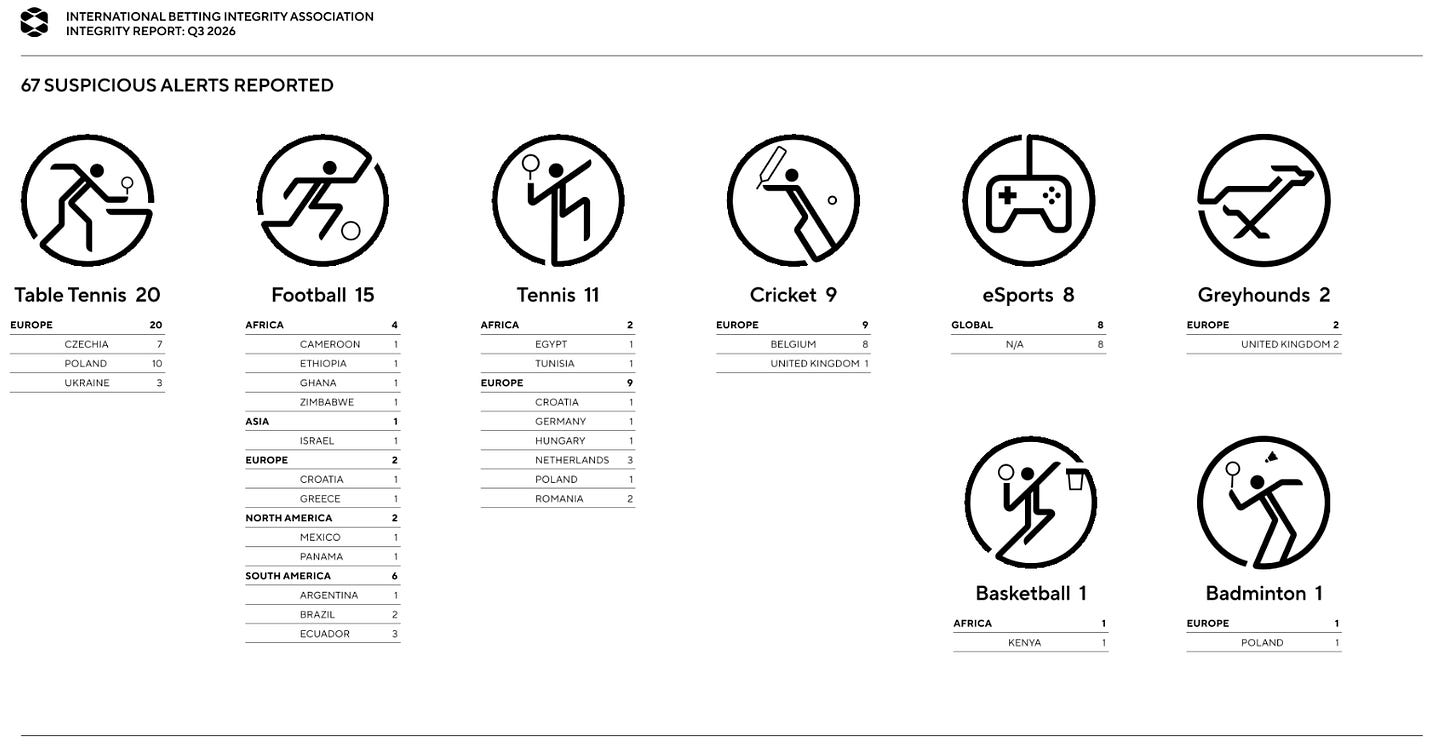
From the International Betting Integrity Association’s latest quarterly report, released last week:
Covers guy Ryan Butler tinkled the keyboard on what the legislative elections in Minnesota could mean for legalized sports betting.
Another quarter, another bit of red ink for Caesars.
ProPublica reporter Jake Pearson was Jeff Edelstein’s guest on the Business of Betting podcast, where he discussed his investigation into DraftKings’ responsible gambling practices.
Speaking of Edelstein, he reported for Casino Reports on the state of online casino in the U.S. of A.
Massachusetts Lottery is selling candy cane-scented scratch tickets during the holiday season.
The Attorney General of Utah has filed more than a dozen criminal charges against Kalshi and its founders.
In a guest column for GGB Magazine, Richard Schuetz revisits the conundrum around offshore gambling in the U.S.
News from the keyboard of SBC’s Ted Orme-Clay that taxes on the most used gaming machines will see a hike of five percent in the UK government’s new budget.
The NCAA will participate in the Bad Actor Program that was created to deal with online abuse.
DraftKings CEO Jason Robins faced some flak for suggesting during an interview last week with CNBC’s Contessa Brewer that parents need to speak with children about gambling.
Geoff Zochodne reported on the efforts by prediction market operators to focus on products with appeal to stock traders.
Excellent reading here from Sportico’s Dan Bernstein on the complicated relationship between U.S. President Don Trump and prediction markets.
According to GiG Software’s CEO, a 25-per-cent reduction in its workforce this year has made the company “sharper” and “fitter”.
There’s a women-only poker room opening in the Lone Star State.
The top court in Brazil has ordered a probe to find out who paid foreign accounts on X to promote president candidate Flavio Bolsonaro using election odds from Polymarket.
Speaking of Polymarket, it’s doing the moonwalk out of Michigan with sports events contracts after receiving ye olde cease-and-desist correspondence from the state’s gaming control board.
Kalshi co-founder/CEO Tarek Mansour made the case yet again about the differences between sportsbooks and prediction markets.
There’s reading a plenty on the U.S. midterm elections, prediction markets and Sportradar’s latest financial results in yesterday’s edition of The Closing Line.
Speaking of prediction markets, a former U.S. Department of Homeland Security policy advisor has some thoughts and layers about them.
In advance of Finland launching its regulated gaming industry next spring, 18 of 81 applications have been approved so far.
Stay up to date with the news on the Canadian gaming industry by following us on LinkedIn and Twitter.
Please send your news releases and other announcements to steve@gamingnewscanada.ca. Also, if you’re interested in learning about our sponsorship and advertising opportunities in the newsletter and on our podcast, please email Steve McAllister.
